
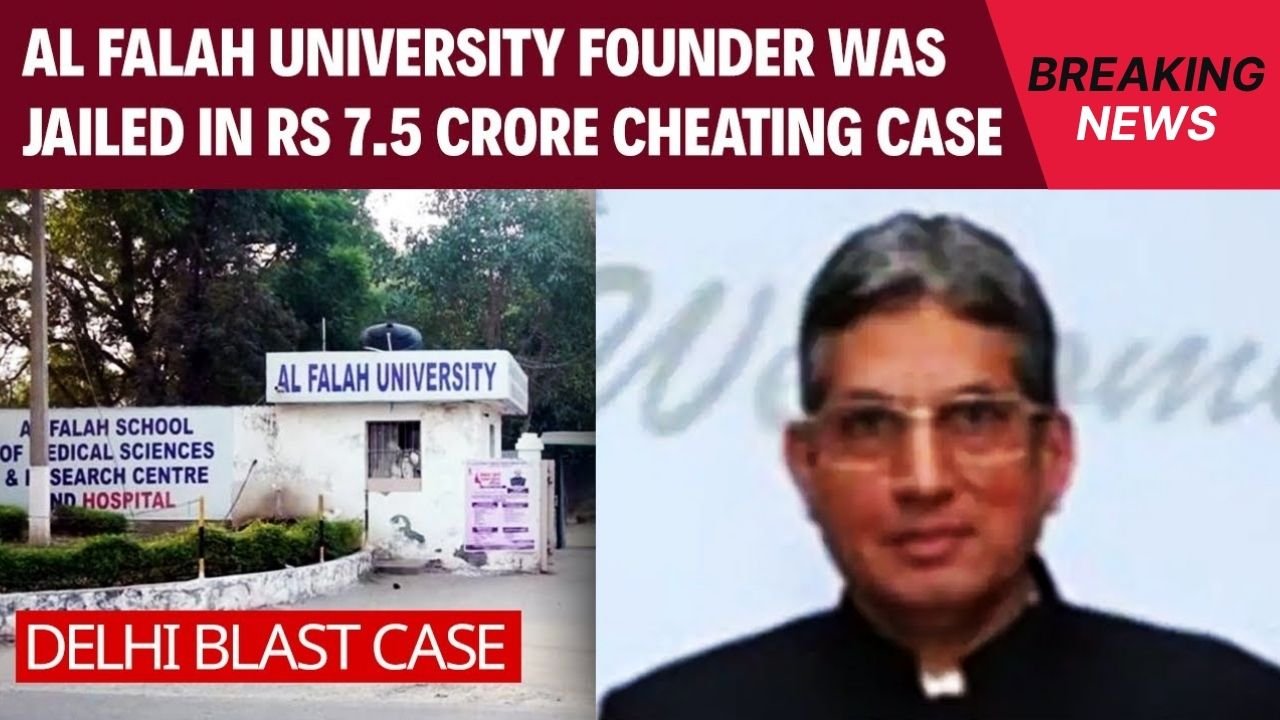

The Enforcement Directorate’s action against Al Falah University has become one of the most widely discussed education sector cases of 2025. What began as allegations of fraudulent accreditation claims has now expanded into a full scale money laundering investigation involving hundreds of crores allegedly collected from students under false representations. The arrest of Chairman Jawad Ahmed Siddiqui has intensified the spotlight on how large scale financial irregularities may have been carried out within an academic setup.
The matter is still under investigation, and while the allegations remain subject to legal testing, the details emerging from court submissions, agency statements and official clarifications indicate serious concerns about financial management and governance at the institution.
How the ED Investigation Began
The Enforcement Directorate initiated its probe after two FIRs filed by the Delhi Police Crime Branch. These FIRs alleged that Al Falah University had misled students and parents by falsely claiming accreditation from NAAC and recognition from the University Grants Commission beyond its actual status.
According to the FIRs, the university projected itself as fully accredited and eligible for benefits despite not having the required approvals. These claims allegedly induced thousands of students to take admission and pay substantial fees, which became the primary basis for the money laundering investigation.
Short Summary of the Case
| Particulars | Details |
|---|---|
| Investigating Agency | Enforcement Directorate (ED) |
| Key Person Arrested | Jawad Ahmed Siddiqui, Chairman of Al Falah Group |
| Alleged Amount Involved | Around Rs 415.10 crore in education related receipts |
| Main Allegations | Misrepresentation of accreditation, cheating, forgery, diversion of funds to family linked entities |
| Legal Provision Invoked | Prevention of Money Laundering Act (PMLA) |
| Recent Court Action | Siddiqui sent to 13 day ED custody |
| Items Seized During Searches | Cash, digital devices and documentary evidence |
| Basis of ED Probe | FIRs alleging fake NAAC and UGC accreditation claims |
| Official Website (UGC) | https://www.ugc.gov.in |
Alleged 415 Crore in Education Receipts Under Scrutiny
During its financial analysis, the ED reported that between FY 2018 to 2019 and FY 2024 to 2025, Al Falah institutions generated approximately Rs 415.10 crore through student fees and other education related income.
The agency has categorized these funds as alleged proceeds of crime. The reasoning is that the fees were collected during a period when accreditation and recognition claims were allegedly false or misleading. The ED argues that students and parents were persuaded to pay fees based on inaccurate information about the institution’s status.
The court, while acknowledging that the investigation is at a preliminary stage, stated that the alleged offences are grave and merit detailed interrogation.
Diversion of Funds to Family Linked Companies
A major concern highlighted in the investigation is the alleged diversion of crores of rupees to companies owned by the chairman’s family members. The ED claims that contracts for construction, catering and various campus related services were consistently awarded to businesses linked to Siddiqui’s wife and children.
Investigators have also identified several shell companies showing financial transactions without significant physical operations. These findings have strengthened suspicion of financial misappropriation.
All these claims, however, will need to be proven before the court during the legal process.
Searches, Seizures and Digital Evidence
The ED carried out extensive searches at around 19 premises associated with the Al Falah group. This included the university campus, administrative offices and residences of individuals connected to the institution.
During these searches, officials seized cash, laptops, mobile devices and numerous financial documents. The agency stated that these items could reveal details about fund flows, company ownerships and the alleged movement of proceeds.
These materials are currently under forensic examination and form a crucial part of the ongoing investigation.
Court’s Observations and Custodial Interrogation
After evaluating the ED’s submissions, the court ordered 13 day custody of Jawad Ahmed Siddiqui. In its order, the court emphasized that custodial interrogation was necessary for several reasons, including:
- Tracing alleged proceeds of crime
- Preventing possible concealment or dissipation of assets
- Avoiding potential influence on witnesses
- Securing documents that may be at risk of destruction
The court also noted that the investigation is still in its early phase, and further evidence may emerge during custodial questioning.
UGC and NAAC Clarifications on Accreditation
The University Grants Commission clarified that Al Falah University is recognized only as a State Private University under Section 2(f) of the UGC Act. It has not applied under Section 12(B), which means it is not eligible for central grants.
NAAC also issued clarification that the university itself does not hold NAAC accreditation. Any references suggesting otherwise were misleading and did not reflect the actual status.
These clarifications play a central role in the claims that students may have been misled into believing they were enrolling in a fully accredited institution.
Impact on Students and Parents
The biggest concern arising from this case is its impact on thousands of students who paid fees and studied at the institution. While there is currently no order cancelling degrees or academic records, the allegations raise serious concerns about transparency in private universities.
Students are advised to:
- Keep all fee receipts, admission documents and certificates safe
- Follow official updates from UGC and state authorities
- Consult legal experts if they feel individually affected
Regulators may also consider reviewing accreditation disclosure norms to prevent such situations in the future.
Ongoing Developments
The ED is expected to continue tracing money trails, scrutinizing company records, examining digital evidence and identifying possible beneficiaries of the alleged diversion. Further actions may include attachment of properties, supplementary charge sheets and regulatory reviews.
The case has highlighted the importance of strong oversight in private educational institutions and the need for students to independently verify accreditation status before admission.
For More Information Click HERE
